College is an important foundation for economic advancement, technical advancement, expert development, and social makeover. In Kenya, universities and various other greater understanding institutions play a substantial role in preparing youths for work, entrepreneurship, study, and management. As the country remains to accept digital innovations and broaden its knowledge-based economy, the future of college is becoming significantly attached to advancement, availability, and functional skills advancement.
Kenya's higher education industry is experiencing considerable adjustments driven by digital knowing, artificial intelligence, industry partnerships, study financial investment, and advancing work requirements. Public universities such as Murang' an University of Innovation, the College of Nairobi, Kenyatta University, and Jomo Kenyatta College of Farming and Modern technology contribute to this improvement via academic programs, technical research, and expert training.
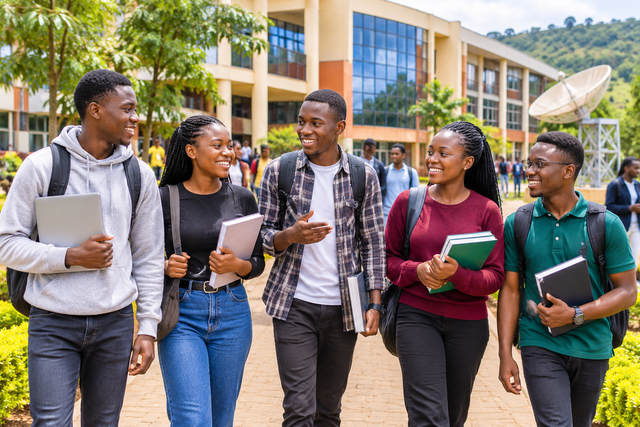
Expanding Accessibility to College Education
Among the major opportunities for Kenya's higher education system is expanding access to college education. Boosting need for specialist certifications has encouraged organizations to create different academic paths, consisting of undergraduate, postgraduate, diploma, and technical programs.
Government-supported trainee funding, scholarships, digital understanding systems, and correspondence course can aid much more pupils access academic chances.
Colleges can also enhance collaborations with high schools and technical organizations to support smoother transitions into higher education.
However, increasing accessibility must be gone along with by improvements in academic high quality, framework, and trainee support.
Artificial Intelligence and Digital Change
Artificial intelligence is expected to play a significantly vital duty in the future of higher education in Kenya.
AI-powered knowing platforms can help students recognize intricate topics through personalised explanations, interactive workouts, and adaptive learning experiences.
Colleges can also make use of electronic modern technologies to enhance management processes, assistance scholastic research study, evaluate instructional efficiency, and provide on-line student services.
Digital laboratories, simulation software program, and virtual libraries may even more enhance finding out opportunities, particularly in clinical and technical self-controls.
Colleges need to develop suitable standards dealing with academic integrity, data personal privacy, false information, and liable AI usage.
Development of Online and Blended Understanding
Online education is transforming how pupils access university programs. Digital classrooms permit learners to join academic activities without always being literally present on school.
Combined learning, which integrates classroom direction with on the internet sources, supplies one more instructional design.
For trainees that live much from college campuses or have specialist duties, versatile discovering plans can enhance access to educational opportunities.
Kenyan universities can enhance these techniques by investing in dependable digital systems, accessible learning products, lecturer training, and interactive online mentor methods.
Nevertheless, internet price, power access, and electronic literacy remain vital considerations.
Study, Technology, and Technological Growth
Research will certainly stay main to the future of Kenyan universities.
Organizations can add to nationwide development by checking out challenges in health care, farming, renewable resource, manufacturing, environmental management, and information technology.
For example, universities can support farming development through study into climate-resilient crops, explore AI applications in healthcare, and explore renewable resource innovations.
Establishments such as Murang' a College of Technology have chances to strengthen their contribution with engineering education, scientific research study, technological development, and market collaboration.
Boosted study funding and global collaborations can even more support scientific explorations and understanding transfer.

Industry Partnerships and Future Work
The partnership in between colleges and companies will come to be progressively vital.
Conventional scholastic qualifications alone may not give all the proficiencies required in rapidly changing sectors. Employers progressively value practical experience, interaction, crucial reasoning, digital literacy, and problem-solving capabilities.
Colleges can react by creating more powerful partnerships with services and expert organisations.
Industrial attachments, teaching fellowships, joint research study, entrepreneurship programmes, and workplace projects can help trainees comprehend specialist expectations.
Academic programs have to likewise adjust to emerging areas such as cybersecurity, data scientific research, robotics, renewable resource, and artificial intelligence.
Difficulties Encountering College in Kenya
Despite substantial possibilities, Kenya's college industry deals with numerous difficulties.
Funding constraints: Colleges call for sufficient financial resources to preserve centers, support research, recruit qualified scholastic team, and improve learning infrastructure.
Graduate unemployment: The accessibility of college qualifications does not automatically ensure work. Establishments must reinforce sensible training and links with labour markets.
Digital inequality: Trainees from deprived neighborhoods might fight with web accessibility, ideal tools, and dependable power.
Framework stress: Growing student populaces can raise need for class, research laboratories, collections, lodging, and various other facilities.
Quality control: Preserving regular academic criteria and ensuring that certifications meet expert and industry requirements continue to be vital top priorities.
Addressing these challenges needs cooperation in between colleges, government establishments, organizations, scientists, and communities.
Sustainability and the Future of College Education And Learning
Sustainable growth is becoming an important factor to consider in college.
Universities can add by advertising environmental study, renewable resource, sustainable farming, accountable resource administration, and environment awareness.
Eco-friendly campuses, energy-efficient buildings, electronic administrative systems, and environmental preservation initiatives can additionally support sustainability objectives.
Universities should prepare students to recognize the relationship between financial growth, ecological protection, and social development.

Conclusion
The future of higher education in Kenya will be shaped by technical improvement, research study technology, electronic understanding, and altering work requirements.
Artificial intelligence, on-line education and learning, industry partnerships, and sensible training deal opportunities to improve academic ease of access and prepare graduates for arising jobs.
Nonetheless, attaining this progression will require dealing with financial constraints, digital inequality, facilities obstacles, and graduate work problems.
Kenyan universities need to proceed adapting their scholastic programmes, reinforcing research study abilities, and creating collaborations with markets and worldwide organizations.
Eventually, the future success of college in Kenya will depend on its ability to integrate scholastic quality with technological technology, useful knowledge, and comprehensive academic possibilities.


